
Hotel projects carry a different kind of deadline pressure than most commercial builds. Franchise agreements lock in opening dates. Reservations are made months in advance. Tour operators, group blocks, and booking platforms all build availability around your projected opening date. When a traditional construction project slips, every one of those downstream commitments slips with it.
Modular hotel construction addresses schedule risk structurally. Manufacturing guest rooms in a factory while site work proceeds in parallel compresses the overall timeline in ways traditional sequential construction can’t replicate. RC2 builds the rooms. Your general contractor prepares the foundation and site. The two workstreams converge at set, when modules arrive on site ready for crane placement.
For hotel developers and operators, that schedule compression translates directly to revenue. An earlier opening means earlier occupancy. And because the modular scope is manufactured under controlled conditions, finish quality is consistent from room to room, which is exactly what franchise brand standards require.
Opening Dates Are Commitments, Not Targets
A delayed multifamily building delays lease-up. A delayed hotel delays revenue, strains franchise relationships, and creates potential exposure to reservation cancellation costs that compound quickly. The stakes in hospitality are different, and the schedule management approach has to match.
Modular construction reduces timeline risk by removing the variables that most often cause traditional hotel projects to slip. Weather doesn’t stop factory production. Material staging happens indoors, protected from the conditions that affect open job sites. And because RC2’s manufacturing process follows a structured production sequence, milestone dates are established early and tracked through a predictable production cadence.
RC2 also coordinates module delivery through Ritz-Trans, our integrated logistics team. Transport, site sequencing, and crane scheduling are managed as a single process rather than through separate vendors. When your modules arrive on site, the conditions for a fast, clean installation are already in place.
Brand Standards Require Consistency That’s Hard to Achieve in the Field
Most hotel brands maintain detailed standards covering room dimensions, finish specifications, fixture selections, millwork details, and furniture layouts. Meeting those standards on a traditional job site, across rotating crews and variable site conditions, is an ongoing quality management challenge. Variation is difficult to prevent when the environment itself isn’t controlled.
Factory production addresses this directly. Every RC2 module is built in the same facility, to the same approved plans, by the same experienced production teams. Dimensional consistency is built into the process because the framing steps are precise and repeatable. Third-party inspectors have access to the production line throughout the build, and each module receives a state-certification label before leaving the facility, confirming compliance with applicable building, electrical, plumbing, and mechanical codes.
For hotel developers who need to demonstrate brand standard compliance to a franchise representative, that documentation and the production process behind it provides a level of assurance that’s difficult to replicate on a traditional job site.
Amenity-Rich Layouts Without the Field Coordination Overhead
Modern hotel design extends well beyond the guest room. Guests expect fitness centers, lobby bars, communal workspaces, and outdoor environments that function as part of the overall property experience. Delivering those spaces through a traditional field construction model, with multiple subcontractors working in parallel, creates significant logistics exposure.
Modular construction simplifies the field scope without restricting design flexibility. RC2’s guest room modules arrive on site fully framed, with mechanical, electrical, and plumbing rough-ins complete. Field work on the modular scope is reduced to system connections and exterior finishes. The result is a cleaner field coordination picture, fewer sequential dependencies, and a lower risk of scheduling conflicts that typically drive hotel project delays.
In the Field: The Dexter Hotel
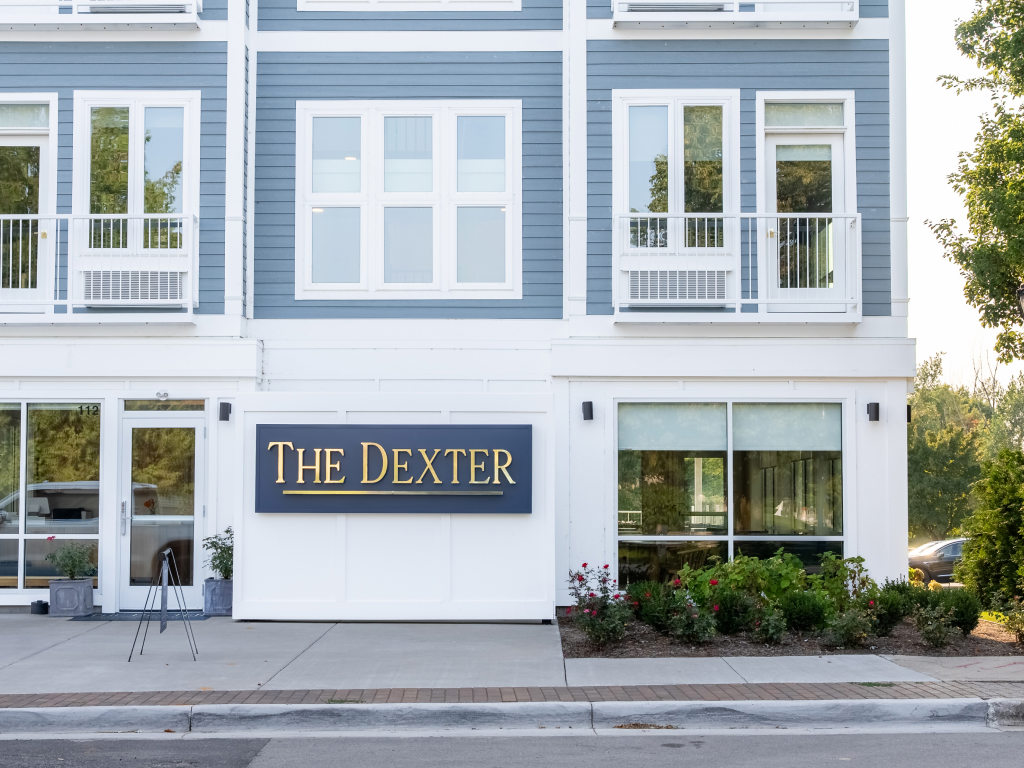
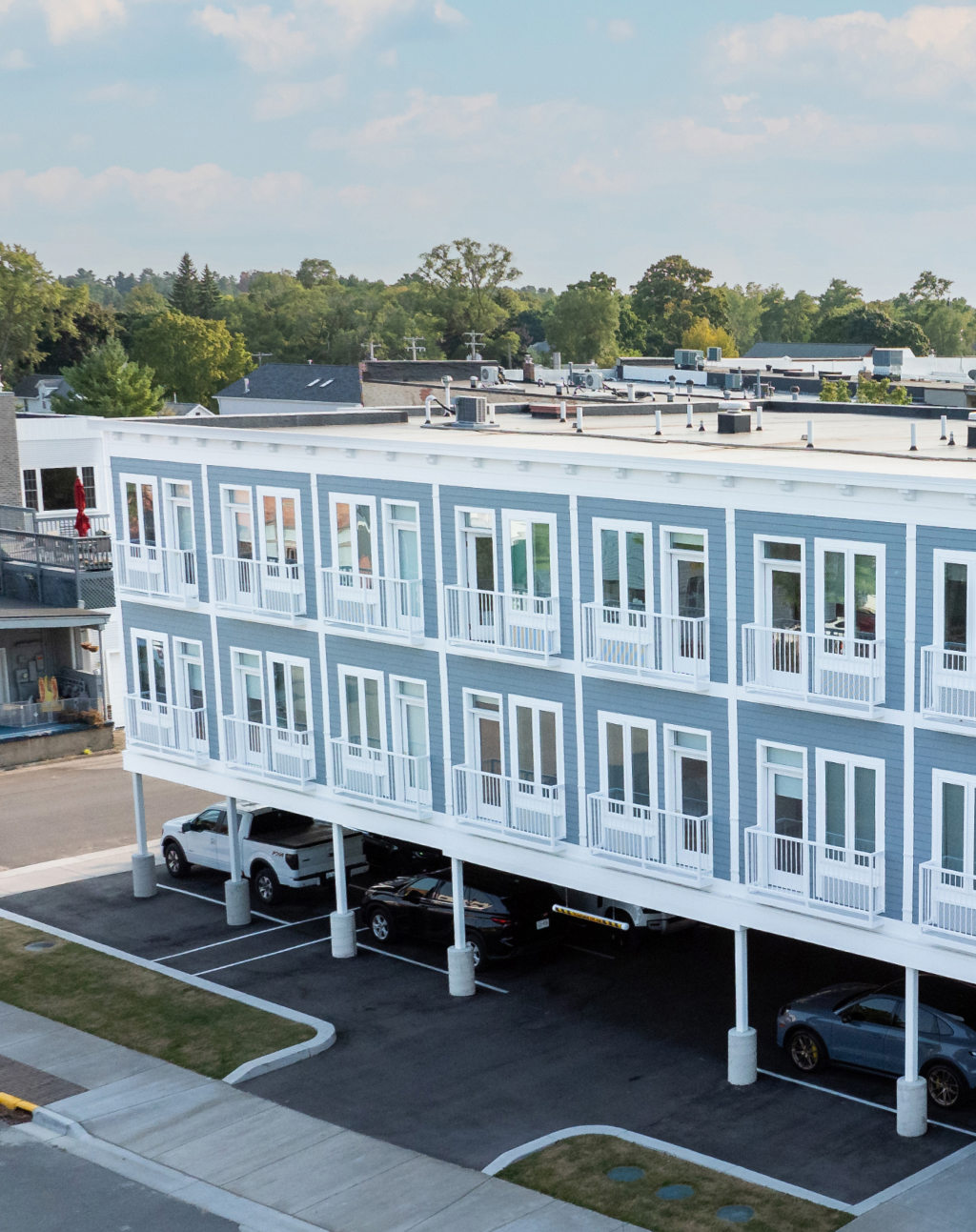
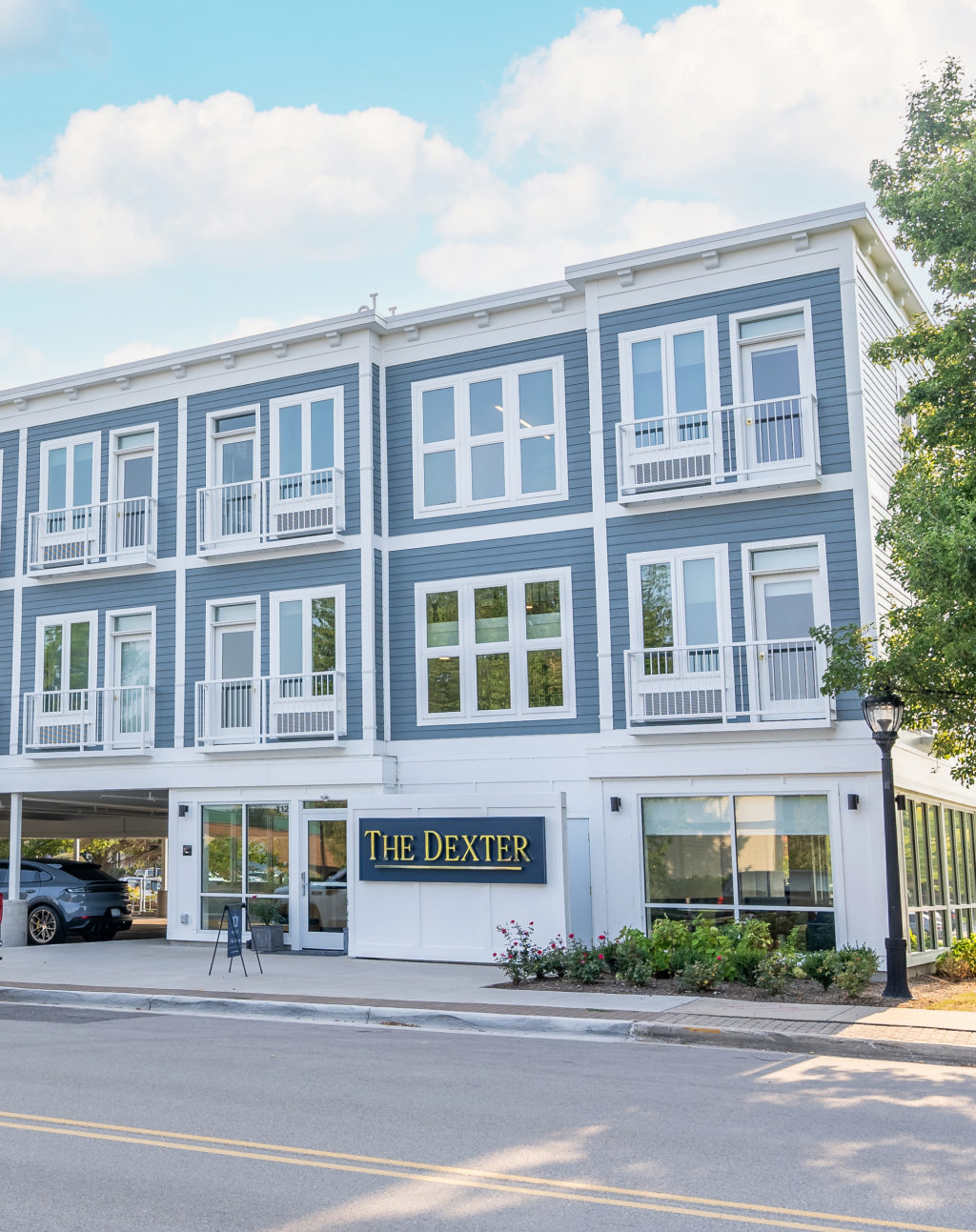
The Dexter Hotel in downtown Elk Rapids, Michigan is a boutique waterfront property built for a resort market on Grand Traverse Bay where hospitality demand outpaced available supply. The Village of Elk Rapids Planning Commission approved the project as a major need in the county.
What opened was 20 rooms, consisting of penthouse, studio, and standard units — all of which are larger than most traditional hotel rooms. These design decisions required precise coordination between aesthetic vision and structural execution.
The modular approach gave the project team the dimensional consistency to deliver those details across every room, while keeping the construction timeline on track in a location where site logistics require careful sequencing.
Explore the full RC2 hospitality portfolio for more on what the team has delivered across hotel and lodging projects. You can also watch RC2’s project videos to see the team and process in action.
Explore the RC2 Multifamily Portfolio
If you’re planning a hotel project and want to understand what a modular construction approach would mean for your schedule, brand standards compliance, and opening date, we’re ready to talk.
Contact the RC2 team to discuss your hospitality project.