
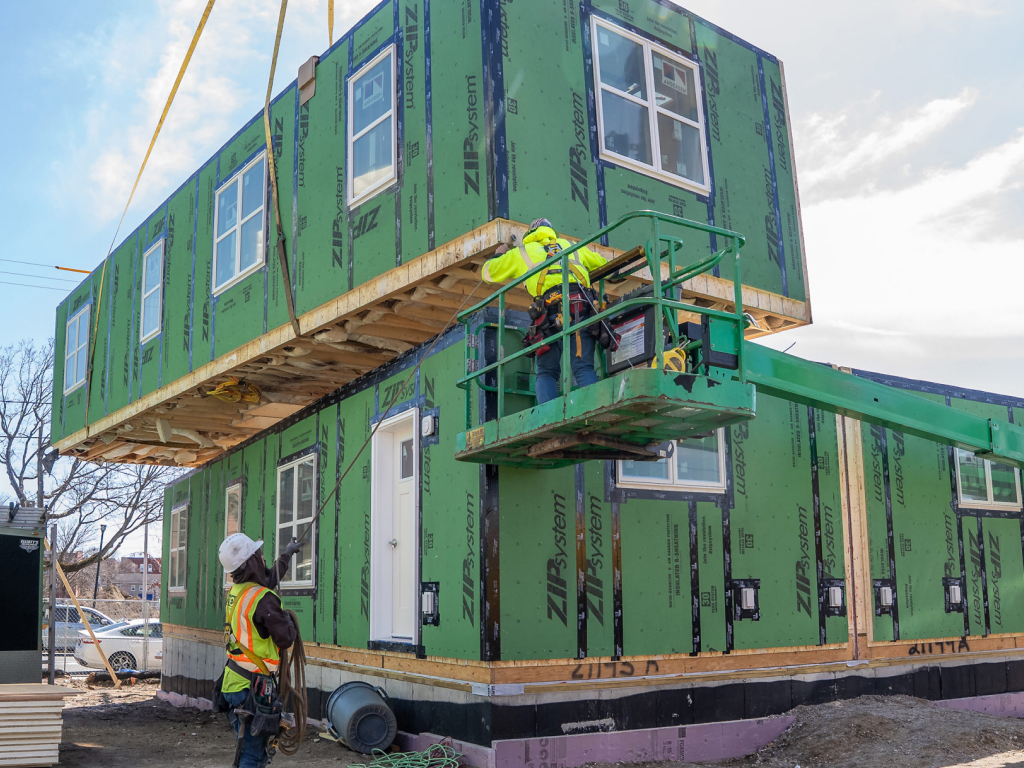
A single modular building is one set of variables: one plant schedule, one logistics plan, one construction schedule. Splitting a project into phases multiplies those variables exponentially, which is why phasing rarely happens by choice. When a project gets phased, something requires it: a site too tight for the crane, sales that come in stages, funding that arrives later, or a change of season.
For developers, general contractors, and architects, predictability on every project, phased or not, is the real test. Speed gets a project noticed. A schedule that holds is what gets it financed, insured, and occupied on time.
RC2 has executed phased modular projects across multifamily, senior housing, and workforce housing, on sites large and small. Phased or not, the schedule comes down to the same three disciplines:
- Sequencing the build to support the overarching construction schedule
- Staging deliveries to match on-site installation logistics
- Coordinating logistics from the plant to the site so each module arrives when the crew is ready to set it
Here's when phasing comes into play, and what the schedule looks like either way.
When a Project Has to Be Phased
Developers rarely ask for a phased project. Most want the building delivered in one shot, and from the owner's side, that's what they get. Phasing changes how manufacturing and installation are staged. It happens out of necessity, and size doesn't decide it. Small buildings get phased, and so do large ones. Four conditions drive most of it.
Site Constraints
This is the most common reason. Most of the phased projects in the RC2 portfolio were phased because the site didn't have room for the crane, the crew, and the modules at the same time.
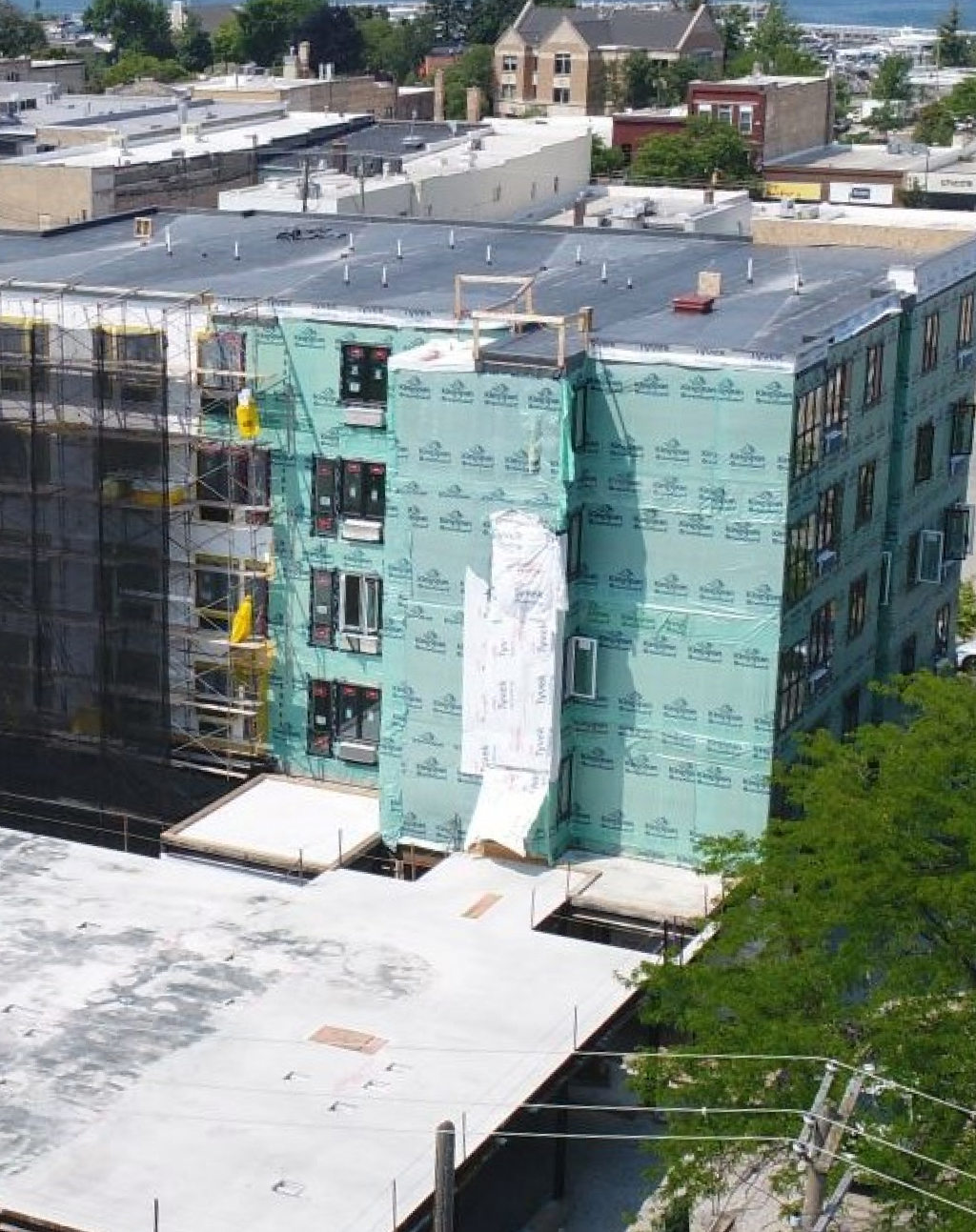
The Boardwalk Condos in Traverse City, Michigan, is a good example. The five-story building is a podium build, with four stories of modules on a raised platform. The building's footprint matched the lot almost exactly, which left nowhere to stage a crane or modules. So, the team built half of the podium, left the other half open for the crane and module staging, and set phase one from that open ground. Once phase one was set, the site team completed the podium, and a larger crane set up in a parking lot to install phase two. All 88 modular units went into one building.
Ocean Green Senior Apartments in Jersey City was phased for the same reason. Another podium build on a dense urban site, it had no on-site storage and limited options for street closures. Phase one set a crane pad within the building's own footprint and pulled units from temporary storage four blocks away. Phase two, a 16-unit addition, needed only a two-day lane closure to finish installation.
Market Absorption & Sales
Picture a community of 100 town homes built in 20 clusters of five. The developer isn't going to sell all 100 at once. A more likely plan is to open a model, sell the first few clusters, and release the rest as sales come in. Phasing lets production follow the pace of sales.
Funding
Sometimes the money arrives in stages. An owner may have funding for the main building at contract and add the rest of the project once more funding is secured. In practice, the later work runs as a continuation of the same project, released when the money is in place.
Weather & Plant Capacity
A hard winter can stop foundation work. If a foundation can't be finished before the ground freezes, part of the project may have to wait for the season to change. Plant capacity matters too. Tying up an entire production line on one building can hold up other projects, so a large job is sometimes staged to keep the plant balanced.
Sequencing and Scheduling Happen on Every Project
Every project gets sequenced and scheduled, whether or not it's phased. Sequencing means building modules in the order they'll be installed. The first module off the line should be the first one set on the foundation, and the last one built should be the last one set. The manufacturing schedule mirrors the installation schedule. On every project, the plant schedule and site schedule have to move at the same pace. Production that runs ahead of the site's readiness leaves finished units sitting in storage. A site that outpaces production leaves crews with open schedule slots and no units to set. RC2 paces module production to the site's actual readiness date, so units arrive as the crew can receive and set them.
That sequence gets set once the drawings are complete and approved. A purchasing plan needs a full set of construction documents, and the installation order has to be settled before the first module goes into production.
What the Schedule Looks Like, From Contract to Punch List
There's no typical timeline for a modular construction project. Duration depends on the number of modules, the square footage, and the complexity of the design. What can be defined are the stages and the range each one tends to fall in. Any timeline quoted as a single number before the drawings are done deserves a second look.
Pre-construction & Permitting
The architect prepares drawings for permit approval. The developer secures entitlements and site permits, and RC2 secures its own approvals to build. This stage can take three months or nine, depending on the architect, the complexity of the project, and the regulatory agency. Because RC2 doesn't control it, the production timeline starts once every approval is in hand.
Procurement, Submittals & Shop Drawings
(8-20 Weeks)
These run at the same time. RC2 builds a purchasing plan that identifies long-lead items, such as a furnace or boiler that can take ten weeks to manufacture and deliver, and orders them as early as possible. In parallel, RC2 prepares shop drawings and product submittals so the owner and architect can approve each material before it's purchased.
Manufacturing
(5,000-10,000 Square Feet per Week)
That's the range a typical modular plant can produce. A 50,000-square-foot project at 10,000 square feet per week is about five weeks of production.
Delivery & Installation
(6-12 Modules per Day)
Delivery isn't a separate block on the schedule. Modules just have to be on site before they're set, so installation is the stage that drives the timeline. A crane can lift more than 12 boxes in a day, but installation covers more than crane picks. The daily rate includes structural connections between modules, weatherproofing, and roofing.
Walkthrough & Punchlist
Once installation is complete, RC2 walks the building and documents any back-ordered items or damage from transit. Crews then return to the site to close out the punch list.
Where Schedules Slip
Most delays start early, in procurement. When submittal approvals come back late, material purchasing waits, which pushes manufacturing, then delivery, then installation. Every stage depends on the one before it. The same holds true on a site-built project.
Incomplete construction documents may cause even more delays. A purchasing plan needs a complete set of drawings with every detail required to order materials, and redesign after the fact adds time. Shop drawing reviews need the same quick turnaround.
The site schedule also has to keep pace with the plant. While modules are in production, the general contractor should be completing infrastructure and foundations, so the site is ready to receive modules the day they're finished. When the plant finishes first, the project waits. When both schedules run in parallel, the project gets the full time savings of modular construction.
Logistics that Hold Up under Site and Weather Constraints
Every modular project depends on the same logistics groundwork: knowing which units are needed on-site on which day and having a transportation plan through RC2's integrated logistics partner, Ritz-Trans, that can hit that window regardless of a tight downtown street grid or a hard winter. On Martha's Vineyard, each module traveled by truck to a mainland barge company, crossed by water to the island, and moved by truck from the dock to the site. The empty carriers then made the same trip in reverse. That sequence repeated for every one of the 106 modules, timed to the island crane and the installation crew.
Cost and Schedule Certainty Across Every Project
Phasing adds steps to a project, and when it's planned early, those steps stay predictable. Once the reason for phasing is identified during preconstruction, the sequence, staging plan, and delivery schedule can be built around it, and each phase can be scheduled with the same discipline as a single building. Whether a project is set in one push or two, that discipline is what delivers speed, predictability, and cost certainty.
See how phased projects like The Boardwalk Condos and Ocean Green came together in RC2's project portfolio or learn how a project moves from design to delivery on our services page.