
When developers, architects, and GCs explore commercial modular construction, the first question is always about cost. Is it truly cheaper? Or is it just faster?
The answer is that focusing on a simple “sticker price” comparison misses the entire point. The true financial power of modular construction isn’t just in the materials; it’s in the comprehensive, large-scale savings that a controlled, predictable process provides.
Let’s break down the real-world costs and reveal where the true ROI of modular construction is generated.
Modular vs. Traditional: A Cost Per Square Foot Comparison
Let’s address the most common question first: “How does the cost per square foot compare?”
On a direct materials-to-materials basis, high-quality commercial modular construction is often very similar in price to traditional site-building. We use the same, if not better, commercial-grade materials, and our modules are engineered to a higher standard to withstand transportation and setting.
The primary trade-off is not sacrificing quality for cost. The trade-off is exchanging a variable, high-risk, weather-dependent site schedule for the absolute certainty and speed of a factory process.
While the initial price per square foot might be comparable, the total project cost is where modular proves its financial advantage.
What Does a Modular Project Actually Cost?
To understand the budget, it’s helpful to see the two main components of any modular project: the factory scope and the site scope.
The Factory Scope
This is the fixed, predictable cost from your manufacturing partner. It includes the lion’s share of the building itself:
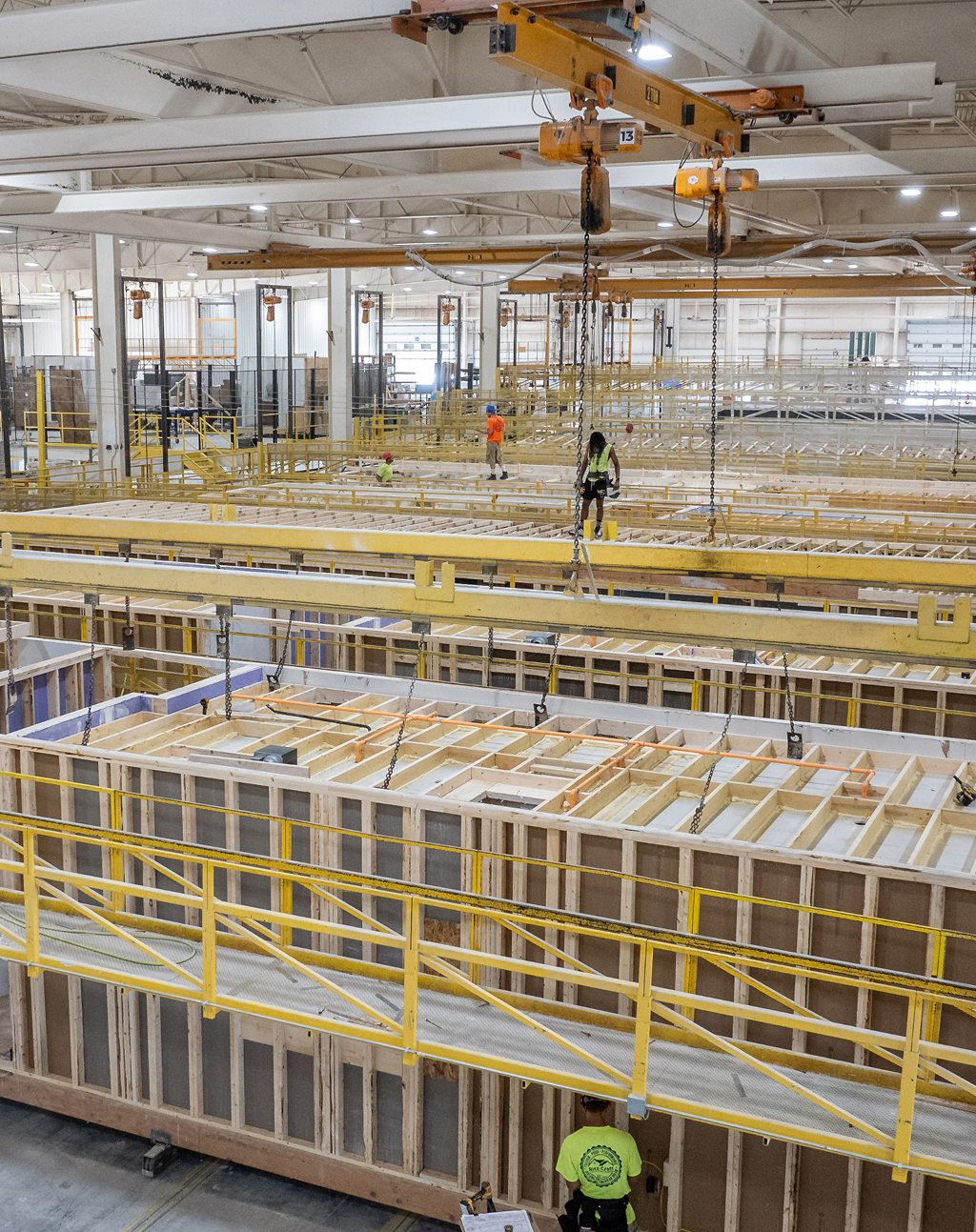
- Manufacturing: The complete factory-built modules, including all materials, labor, and interior finishes (flooring, paint, fixtures, etc.).
- Engineering & Drawings: All modular shop drawings and state approvals.
- Transportation: The coordinated delivery of all modules from our factory to your job site via our logistics partner, Ritz-Trans.
The Site Scope
These are the variable site-specific costs that must be budgeted for, just as with a traditional build. A common mistake is not accounting for these site costs early in the planning phase.
- Foundation: Concrete slab, crawl space, or basement.
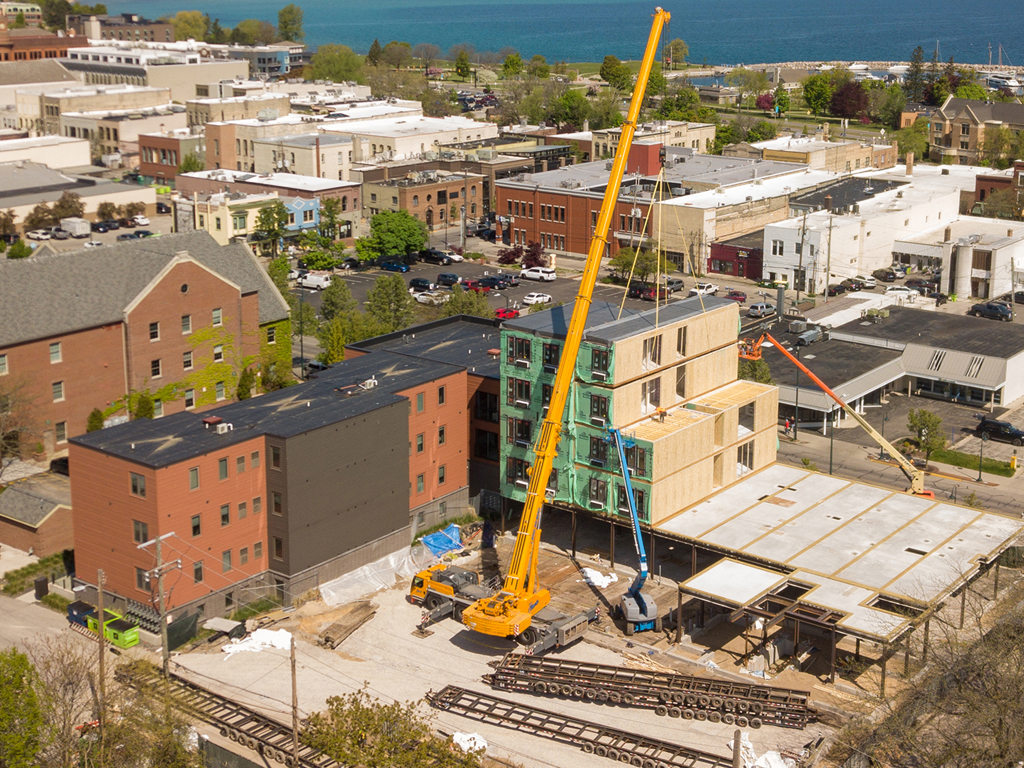
- Crane & Set: The cost for the crane and specialized crew to lift and place the modules.
- Utility Connections: Hooking up water, sewer, and electric to the building.
- Module “Button-Up”: The on-site work to connect the modules’ mechanical, electrical, and plumbing systems and complete final exterior/interior finish work at the module seams.
- Site Work: All other site-specific needs, like paving, landscaping, and sidewalks.
Commercial Modular Savings: How You Generate ROI
The true modular savings are driven by two key advantages—accelerated time and optimized labor—which combine to create the ultimate financial benefit: certainty.
Massive Schedule & Financing Savings
This is the single greatest financial benefit. While your on-site team is pouring the foundation, our factory team is simultaneously building your modules. This concurrent construction shaves 30-50% off the total project timeline.
This accelerated schedule creates two massive sources of ROI:
- Reduced Financing Costs: Your construction loan is open for a much shorter period, saving you tens or even hundreds of thousands of dollars in interest payments.
- Faster Occupancy (The Ultimate ROI): Your building isn’t just finished faster; it's generating revenue faster. Apartments can be leased, hotel rooms booked, and student housing filled months ahead of a traditional schedule, transforming your pro forma.
Reduced Labor & Site Costs
By moving 90% of the construction into our factory, you dramatically reduce your reliance on expensive, often scarce on-site skilled labor. This minimizes the impact of labor shortages, streamlines site management, and reduces site-related costs like security, waste removal, and general conditions.
Build On a Foundation of Financial Certainty
While a traditional build is exposed to weather delays, labor shortages, and rising site costs, a modular project moves forward with the certainty of a manufacturing process. You gain massive savings in financing and, most importantly, you start generating revenue months ahead of schedule.
Ready to analyze the total value modular can bring to your next project? Let's build on a foundation of certainty together.